
Heirloom Quality Printed Portraits: 7 Lasting Benefits
Table of Contents
What Defines Heirloom Quality in Printed Portraits
Materials That Stand the Test of Time
The Importance of Printed Family Photos for Generations
Digital vs. Physical: Why Printed Portraits Outlast Files
What Archival Longevity Actually Means
The Format Migration Problem
The Benefits of Full Service Family Photography
Displaying Heirloom Portraits in a Modern Home
Curating a Gallery Wall That Feels Intentional
Where to Hang Heirloom Portraits
Custom Framing as a Design Decision
Caring for Your Heirloom Portraits: A Maintenance Guide
Conclusion
Frequently Asked Questions
Last Updated: September 27, 2026
What Defines Heirloom Quality in Printed Portraits
Heirloom quality describes a printed portrait made to survive generations, not just a few years on a shelf. At K-Rae Images, we treat that standard as the starting point for every portrait we create, because the difference between a print that lasts and one that fades comes down to materials, inks, and how the final piece is assembled.
The term gets thrown around loosely in photography, so it helps to be precise. Heirloom quality refers to a printed portrait produced with archival materials and pigment-based inks on acid-free paper, then framed or bound to museum-grade standards so the image holds its color and detail for decades. Investing in these durable materials ensures that museum quality prints retain their aesthetic integrity and emotional resonance long after digital files have become obsolete.
That definition matters because most families assume any professional print will last. Many do not. Understanding the materials behind a portrait is the first step toward choosing artwork your grandchildren will still be able to display.
Materials That Stand the Test of Time
Pigment inks and acid-free paper form the foundation of any archival print. Pigment inks resist fading far better than dye-based alternatives, and acid-free paper avoids the yellowing that breaks down cheaper stock over time.
Museum-grade framing adds another layer of protection. Ultraviolet-filtering glass, acid-free matting, and proper backing keep moisture, light, and airborne contaminants away from the image itself. According to the Library of Congress guidance on caring for photographs, controlling light exposure and using archival enclosures are two of the most effective steps for long-term photo preservation.
The takeaway is simple: a portrait is only as durable as its weakest material. When every layer is chosen for longevity, the print becomes an heirloom rather than a temporary keepsake.
The Importance of Printed Family Photos for Generations
Printed family photos carry a weight that digital files rarely match. They become tangible memories, passed hand to hand, displayed on walls, and pulled from folio boxes during holidays and family gatherings.
There is a well-documented emotional resonance to physical photographs. A printed portrait invites touch, conversation, and storytelling in ways a phone screen cannot. Children point to faces. Grandparents trace family resemblance across generations. These small moments are how generational legacy actually gets built.
Consider what happens when a family gathers. Someone inevitably pulls out an old album or points to a framed portrait on the wall. That portrait sparks a story, and the story becomes part of family history. Digital files rarely trigger the same ritual, because they live in folders nobody opens.
For families who want visual storytelling to outlast them, printed portraits are the medium that keeps working long after the session ends.
Digital vs. Physical: Why Printed Portraits Outlast Files
Digital obsolescence is the quiet risk most families overlook. Hard drives fail, cloud accounts lapse, file formats fall out of use, and phones get replaced every few years. A printed portrait has none of those vulnerabilities.
Consider the mechanics. A JPEG stored on a consumer hard drive has a typical service life of three to five years before drive failure becomes likely. Cloud storage depends on a subscription remaining active and a company remaining in business. Even when a file survives, the software needed to open it often does not. The National Archives guidance on preserving family archives makes the same point: physical copies remain one of the most reliable ways to safeguard images for the long term.
What Archival Longevity Actually Means
When a print is described as archival, that is not marketing language. It refers to measurable performance under standardized testing. The ISO 9706 standard for permanent paper sets requirements for paper that resists deterioration over time, and the ANSI/NISO Z39.48 standard for permanence of paper establishes similar benchmarks for publications and records. A print meeting these standards uses acid-free, lignin-free stock with an alkaline reserve that neutralizes acids as they form.
Pigment inks behave differently than dye-based inks. Dye molecules dissolve into the paper coating and fade relatively quickly under light exposure. Pigment particles sit on the surface and resist fading far longer. Under display conditions, a pigment print on archival paper can hold its color for generations, while a dye-based print may show noticeable shift within a decade.
The Format Migration Problem
Think about the last time you tried to open a file from a decade-old device. Format migration is a real problem for anyone relying solely on digital storage. A print, by contrast, needs no software, no power, and no subscription to be enjoyed.
A common pattern among families is the 'shoebox problem in reverse', decades of digital photos accumulate in folders nobody opens, while a single framed portrait on the wall gets seen every day. The physical print does not require a decision to view it. It simply is there.
Print longevity is not nostalgia. It is a practical hedge against the technology cycle that erases so many family photos every year. Digital backups are valuable, but they work best alongside a physical original, not instead of one.
The Benefits of Full Service Family Photography
Full service family photography removes the coordination burden that keeps many families from booking a session at all. Instead of juggling outfits, hair, makeup, and props on your own, a boutique studio handles those details so you can focus on the experience.
The benefits of full service family photography extend well beyond convenience. A studio that manages styling, wardrobe, and session flow produces more consistent results, because every element is planned and controlled. That consistency shows up in the final portraits.
At K-Rae Images, that full-service approach includes professional hair and makeup, access to a large client closet of couture maternity gowns, and a fully stocked studio with newborn props. The studio also provides a dedicated client entertainment room and a zero-gravity massage chair, so family members have a comfortable place to wait during the session.
Here is what a full-service session typically covers:
Pre-session styling and wardrobe consultation
Professional hair and makeup on the day of the shoot
A curated selection of gowns and props
A relaxed studio environment with refreshments
Guidance through posing and session flow
Heirloom artwork design and installation after the session
The result is a stress-free experience that produces portraits worth printing, not just files worth storing.
Displaying Heirloom Portraits in a Modern Home
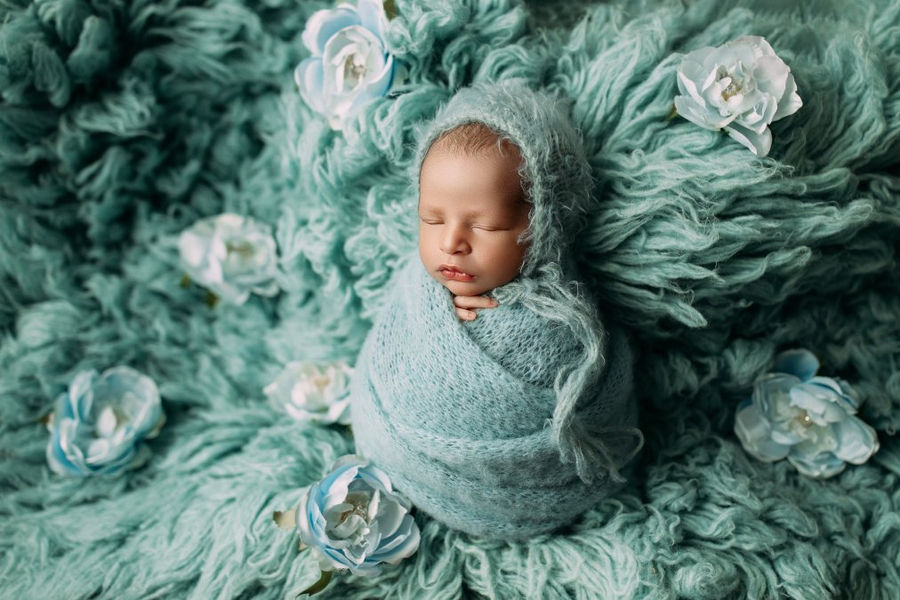
Heirloom portraits do not have to look traditional or dated. Modern homes display them as gallery walls, oversized statement pieces, and clean-lined frames that fit contemporary interiors. The key is treating the display as a curated collection rather than a collection of framed photos.
Curating a Gallery Wall That Feels Intentional
The difference between a gallery wall that looks like an heirloom collection and one that looks like clutter comes down to three variables: scale, spacing, and consistency.
Scale: A small print on a large wall disappears. A common guideline is that artwork should occupy roughly two-thirds to three-quarters of the width of the furniture below it.
Where to Hang Heirloom Portraits
Hallways and stairwells are natural gallery spaces because they invite pause and progression. A series of portraits along a staircase tells a story as you move through the home. Living rooms and entryways work best with a single large statement piece that commands attention.
Custom Framing as a Design Decision
Custom framing is where integration with modern decor really happens. A framer can match frame profiles, mat widths, and finishes to the room, so the portrait feels intentional rather than added on. Mat width matters more than most people realize, a wider mat (three to four inches) gives a portrait a gallery-like presence, while a narrow mat makes it feel like a snapshot.
Caring for Your Heirloom Portraits: A Maintenance Guide
Basic care keeps an heirloom portrait in display condition for decades. The rules are simple, and they apply to any archival print regardless of where it was made.
Keep portraits out of direct sunlight, which fades pigment inks over time
Avoid hanging prints above heat sources or in damp rooms like bathrooms
Dust frames with a dry, soft cloth rather than sprays or solvents
Handle loose prints by the edges only, and wear cotton gloves when possible
Store unframed prints flat in acid-free sleeves inside a folio box
Keep framed pieces away from humidifiers and kitchen steam
Inspect frames periodically for loose backing or moisture damage
Pro Tip Rotate displayed portraits every year or two, especially any hanging near windows. Even indirect daylight accumulates, and rotating pieces spreads that exposure across your collection instead of concentrating it on one print.
Conclusion
The real challenge with family portraits is not taking them, it is making sure they survive long enough to matter. Digital files get lost to failed drives and forgotten passwords, while printed portraits on archival paper keep telling the story.
Frequently Asked Questions
What defines heirloom quality in professional portrait photography?
Heirloom quality means portraits are printed on acid-free paper using pigment inks that resist fading for over 100 years. They are mounted on archival materials, custom-framed with UV-protective glass, and designed to be passed down through generations. This level of craftsmanship ensures your family's images remain vibrant and intact, unlike standard photo prints that yellow or fade within a decade.
Why are printed portraits considered a better investment than digital files?
Digital files are vulnerable to hard drive failures, format changes, and accidental deletion. Printed portraits on archival materials are tangible memories that do not require technology to view. They appreciate in sentimental value over time and become family treasures. A full service photography experience includes professional printing and installation, so your portraits are displayed and preserved correctly from day one.
How should heirloom portraits be displayed in a modern home?
Choose walls away from direct sunlight to prevent fading. Group portraits in a gallery wall or place a statement piece above a console table. Custom framing with UV glass and acid-free mats protects your investment. Many families rotate displays seasonally, storing unused pieces in archival folio boxes. Professional installation ensures proper hanging and alignment for a polished look.
What materials are used to ensure heirloom quality longevity?
Heirloom portraits use acid-free paper, pigment inks, and archival mounting boards. Frames are made from solid wood or metal with UV-filtering glass or acrylic. These materials meet museum-grade standards, preventing yellowing, fading, and deterioration. Proper storage in folio boxes further extends the life of your portraits, keeping them safe for future generations.
Reach out Today


Comments