
How to Plan Maternity and Newborn Photography Sessions
Last Updated: November 21, 2026
Quick Summary
Maternity newborn photography means booking both your pregnancy portraits and your baby's first portraits with one photographer in one continuous arc. Schedule maternity photos between 28 and 34 weeks, aiming for 30 to 32 weeks, and newborn photos between 5 and 14 days after birth. Reserve your newborn date before your baby arrives so the flexible slot shifts once your baby is born.
Book your maternity date as soon as you enter your second trimester, since popular weekend slots disappear first.
After roughly two weeks, babies become more alert and stretch out, making curled poses harder to achieve.
Choose fabrics with stretch and drape, like jersey, chiffon, and soft knits, and avoid stiff fabrics and busy prints.
Ask whether the photographer uses a spotter for every posed shot and will show an unedited frame from a composite setup.
Ask for the total cost of the collection you want, not just the entry price, since some packages charge separately for files and prints.
Ready to book maternity and newborn portraits?
K-Rae Images handles wardrobe, styling, and heirloom artwork so you can simply relax and be photographed.
Table of Contents
Why Planning Maternity and Newborn Photography Together Works
Maternity newborn photography is the practice of booking both your pregnancy portraits and your baby's first portraits with one photographer, in one continuous arc. Planning both sessions together removes the guesswork from two of the most emotional weeks of your life. Planning both sessions at once tends to make the experience feel calmer, while scrambling after delivery can feel like a blur.
Here is why the pairing works so well.
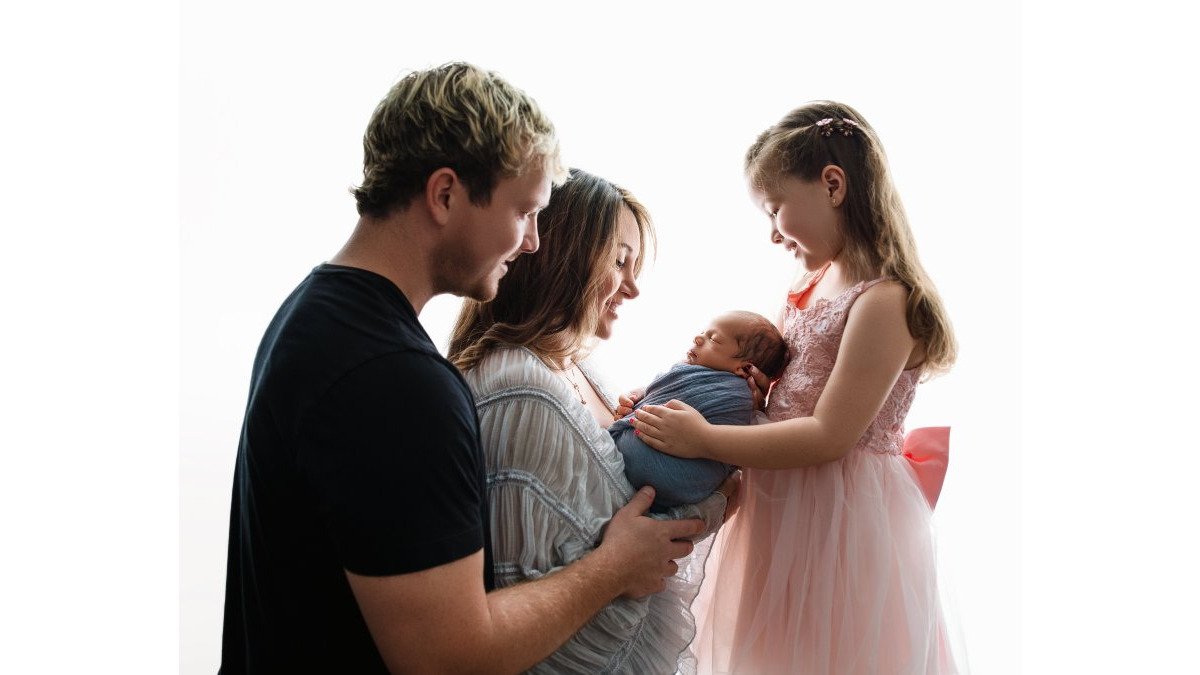
Your maternity session captures anticipation. Your newborn session captures the first days you will never get back. The two sets of images belong together on the same wall, in the same album, in the same style of light and color. When one photographer handles both, the visual story stays consistent from bump to baby.
The practical benefit matters just as much. You book once, you learn the studio once, and you already trust the person holding your newborn.
Below, we walk through exactly when to schedule each session, what to wear, how to prepare your family, and what to ask about safety before you commit.
When to Take Maternity Photos for a Relaxed Session
The ideal time for maternity photos is between 28 and 34 weeks of pregnancy. During this window, your bump is clearly visible, your energy is usually steadier, and you can still move comfortably into seated and standing poses.
The Ideal Window and Why It Matters
Earlier than 28 weeks, the bump can read small in photos. Later than 34 weeks, swelling, fatigue, and discomfort climb, and some mothers deliver early, which can cancel a session entirely. Scheduling inside the window protects you from both problems.
We recommend aiming for the middle of that range. A session around 30 to 32 weeks tends to be the sweet spot: a full, round bump, good stamina, and enough buffer before delivery.
Booking Early to Lock In Your Date
Book your maternity date as soon as you enter your second trimester. Popular weekend slots disappear first, and a fixed date on the calendar lets you plan wardrobe, hair, and makeup without a rush. When you book with us, you can review our maternity session offerings and choose a date that fits your schedule.
If you are still deciding how you want to look and feel in your portraits, our guide to maternity photoshoot wardrobe styling covers fabrics, colors, and family coordination in detail.
When to Take Newborn Photos Before the Curled-Up Stage Passes
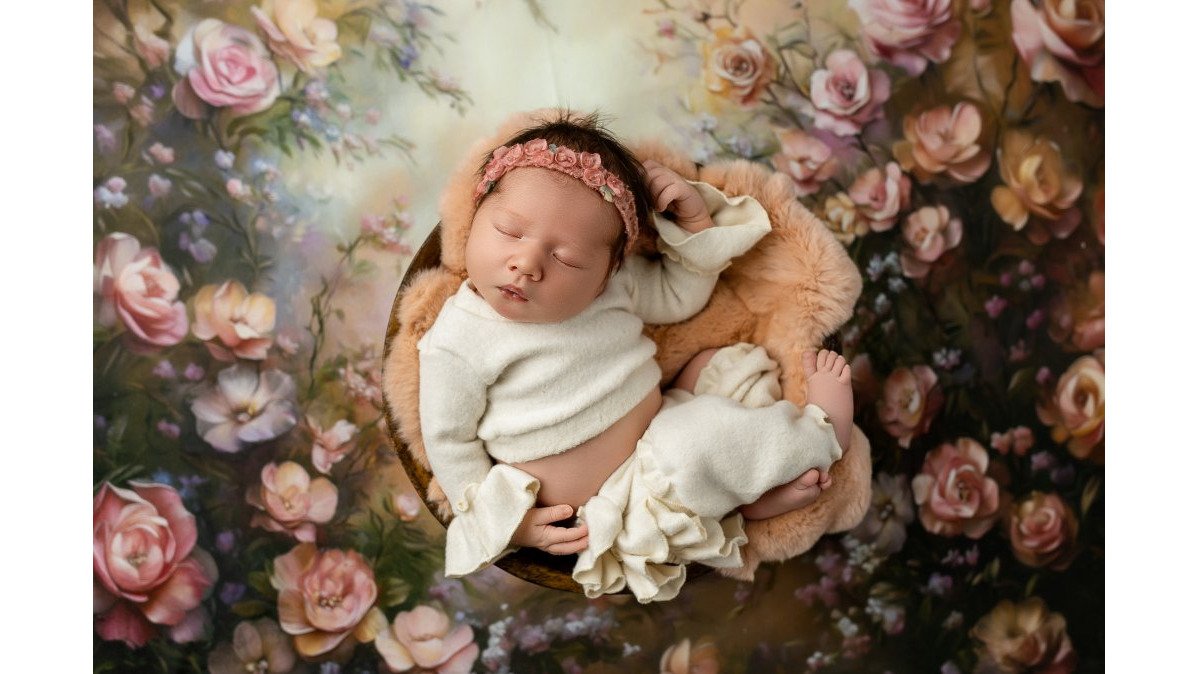
Newborn photos work best between 5 and 14 days after birth. In that window, babies sleep deeply, stay curled in those classic tucked poses, and tolerate gentle handling well.
After roughly two weeks, many babies become more alert and start to stretch out, which makes the curled poses harder to achieve. That is not a reason to skip photos, but it is a reason to plan ahead.
The key move is to reserve your newborn date before your baby arrives. We hold a flexible slot around your due date and shift it once your baby is born. That way, you are not making phone calls from a hospital bed or a sleepless first week at home.
What to Wear for Maternity Photos and Newborn Portraits
Wardrobe is where most parents feel the most uncertainty, and it is also where a little planning pays off the most. The goal is simple: clothes that flatter your shape, photograph cleanly, and keep you comfortable.
Maternity Wardrobe: Comfort, Fit, and Fabric
Choose fabrics with stretch and drape. Jersey, chiffon, and soft knits move with your body and photograph smoothly. Avoid stiff fabrics and busy prints that compete with your face.
Fit matters more than size. A gown that skims your bump reads better than one that clings or tents. Solid colors in soft tones, jewel tones, or classic black and white photograph reliably.
You do not need to buy anything. Our studio keeps a large client closet of couture maternity gowns you can borrow for your session, which means you can try several looks without the expense. You can read more about the client closet before your visit.
Newborn and Family Outfits That Photograph Well
For newborn portraits, simple is better. A plain onesie, a swaddle, or just a diaper all work. The studio supplies wraps, props, and bonnets.
For parents and siblings, coordinate rather than match. Pick two or three colors and let everyone wear a variation. Neutral tones and soft pastels keep attention on faces and skin.
Preparing Parents, Babies, and Siblings for the Session
Preparation is mostly about lowering stress, not perfecting anything. Feed your newborn right before you leave home, bring a pacifier if your baby uses one, and pack a spare outfit for everyone.

The woman is American.
For siblings, bring a favorite snack and a small toy, and set expectations in simple terms the day before. Many parents ask a grandparent to bring siblings later in the session so the newborn portraits happen first, in a quiet room.
Parents should arrive with nothing to manage. Eat beforehand, bring water, and let the photographer direct the poses. A common mistake is trying to control the session; the best portraits come from parents who simply relax and follow along.
Newborn Safety and Posing Practices to Ask About
Newborn safety is the question worth asking before you book, and any experienced photographer will welcome it. That same care extends to clothing: soft, simple layers that keep a newborn comfortable can complement the session’s gentle styling, as Che Bella Casa shows.
Ask directly: "Do you use a spotter for every posed shot?" and "Will you show me an unedited frame from a composite setup?" A confident photographer will answer without hesitation.
Watch out: some studios advertise "posed newborn sessions" without mentioning composites. If a photographer claims they achieve those curled poses solo with no spotter and no composite editing, treat that as a red flag.
Here is what safe practice looks like in the studio:
Spotting: a second set of hands stays within reach during any elevated or prop-based pose, and the baby is never left unsupported, even for a second, while the photographer adjusts a wrap or camera.
Temperature: a warm studio helps keep an unswaddled baby comfortable. Ask how the photographer monitors the baby's temperature.
Hygiene: ask how props, wraps, and bonnets are cleaned between sessions and how often blankets are washed.
Patience: ask how feeding, soothing, and breaks are built into the session schedule so the pace suits your baby.
Hand hygiene: the photographer and any assistant should wash or sanitize hands before handling your baby, and ask you to do the same.
We keep our studio fully stocked with newborn props. A fussy or colicky baby is normal, and you can ask us how we accommodate feeding and settling during your session.
If you have had a C-section and are still recovering, tell your photographer in advance. Let us know your needs in advance so we can discuss how poses can be adapted for you. Also mention any birth interventions, jaundice, or feeding challenges, these details help the photographer plan a session that respects your baby's needs.
Maternity Newborn Photography Packages and What They Include
Maternity newborn photography packages bundle both sessions, and the best ones include far more than a folder of digital files. Ask what happens before, during, and after the shoot, and ask for a written list of deliverables so you can compare offers side by side.
A full-service package typically covers:
Stage | What to Confirm |
Before the session | Wardrobe access, hair and makeup, session planning, and a pre-session consultation |
During the session | Props, wraps, refreshments, comfort amenities, and a private changing area |
After the session | Image selection appointment, print and album options, and a viewing gallery deadline |
Delivery | Digital images plus heirloom prints and wall art, with clear timelines for each |
Pricing depends on the collection you choose, the number of finished images, and the products you add, so we quote each family individually rather than publish a single figure. Our guide to luxury maternity photography packages explains what each collection includes.
When comparing packages, ask these questions:
How many finished images are included, and can I purchase more later?
Is hair and makeup included, or is it an add-on?
What is the turnaround time for digital files and for printed products?
Are there any fees for rescheduling due to delivery timing?
What happens if my baby arrives early or late, how flexible is the newborn session date?
The question to ask yourself is not what a session costs, but what you will actually do with the images. A disc of files that stays on a hard drive helps no one. Finished albums and installed wall art do.
Watch out: some packages advertise a low session fee but charge separately for digital files, prints, and albums. Always ask for the total cost of the collection you want, not just the entry price.
Reach Out to K-Rae Images to Plan Your Sessions
The hardest part of maternity newborn photography is not the posing or the wardrobe. It is remembering to book before the calendar fills and the baby arrives. That single decision, made early, is what separates a calm experience from a stressful one.
We built our studio around removing every task from your plate. Professional hair and makeup is handled on site. Our client closet holds couture gowns you can borrow. The studio includes a client entertainment room and a zero-gravity massage chair. After your session, we help you select images and install heirloom wall art in your home.
Kristin Rae is an award-winning, published photographer with over 12 years of experience. As Sheena put it after her maternity and milk bath session: "the images were better than I could have ever even imagined."
Reach out today to reserve both dates and let us handle the details.
Planning two sessions at once sounds like more work. In practice, it is less. One conversation, one studio, one photographer who already knows your family's story before your baby arrives.
Frequently Asked Questions
What month of pregnancy should you take maternity photos?
Maternity photos are often planned in the third trimester, when your bump is clearly visible. Book your date several weeks in advance so you can choose a time that fits your schedule.
How long after birth can you do newborn photos?
Newborn photos are typically planned within the first few weeks after birth, when many babies are sleepy and easier to pose. Tell your photographer your due date early so you can plan around it.
Should you book maternity and newborn photography together?
Booking both sessions at once is the simplest approach. Booking both sessions together can make planning simpler. Ask how the studio handles date changes if your baby arrives early or late.
How do you prepare for a newborn photography session?
Feed your baby shortly before you arrive and bring a spare bottle or feeding supplies, diapers, and a pacifier if you use one. Dress your baby in loose clothing that won't leave marks on the skin, and bring a simple backup outfit for yourself. Siblings do best with a snack and a favorite toy. The studio provides newborn props, so you can travel light.
Comments